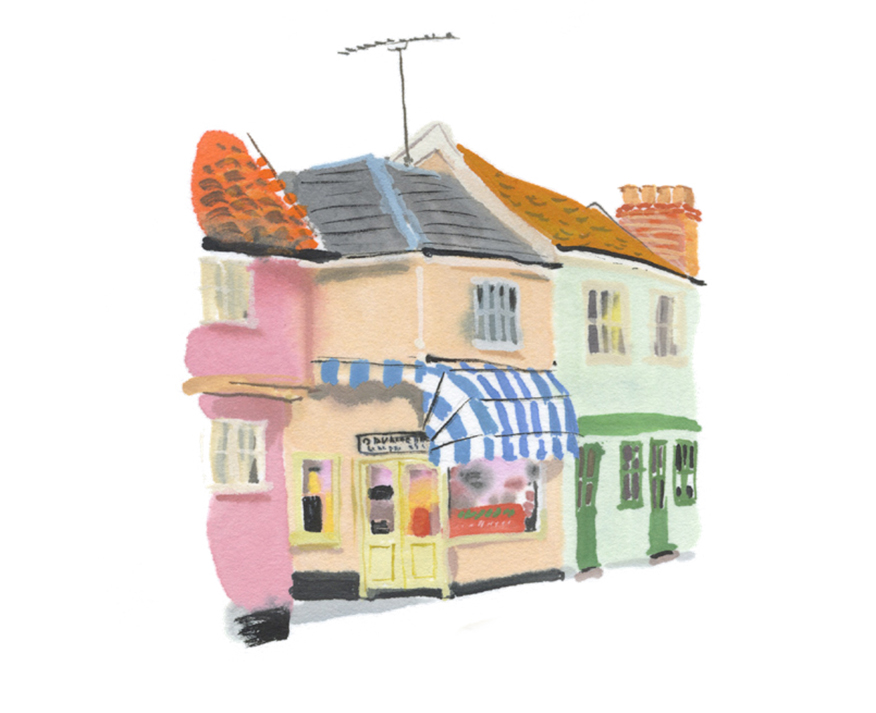
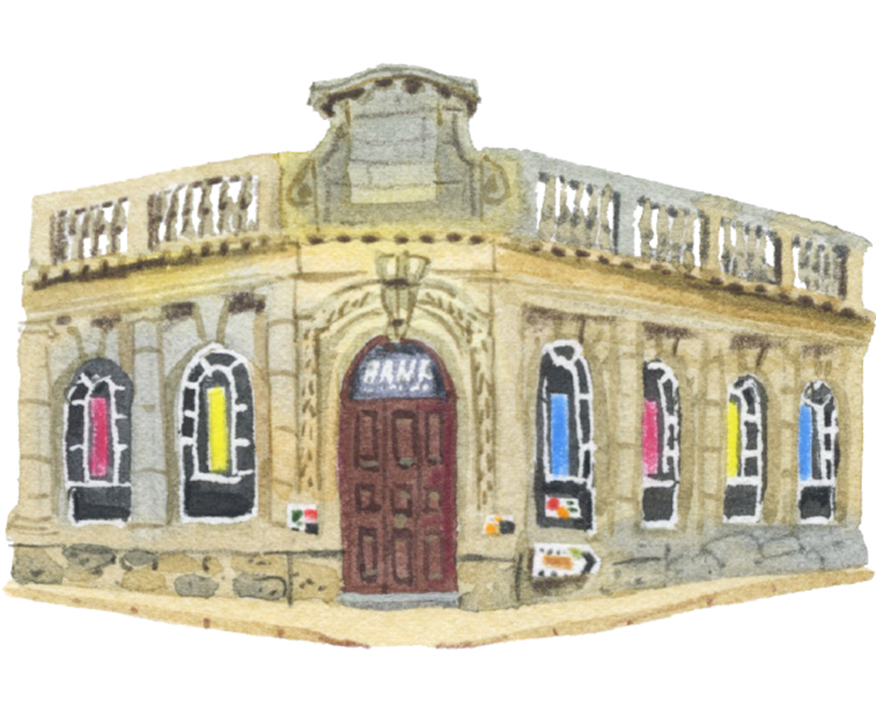
Eye has a remarkable concentration of historic buildings and stories for a town of its size.
From medieval churches and guildhalls to later Victorian landmarks, Eye’s past is visible at every turn. Many of these places are still part of everyday life, making them easy to explore on foot and ideal for visitors discovering one of Suffolk’s most characterful towns.
A SHORT HISTORY OF EYE
This whirlwind rattle through Eye’s history is based on the book ‘The History of Eye’ by Clive Paine and with the contribution of Jan Perry. Thanks and respect to both. The book is available in the town from the chemist and the library.
AN ISLAND
The town of Eye derives its name from the Old English word for ‘island’ and it is believed that the first settlement on the site would have been almost entirely surrounded by water and marshland formed by the River Dove to the East and South East; its tributary to the North; and by the low land, part of which now forms the Town Moor, to the South and West. Even today, the area is still prone to flooding in areas close to the River Dove, a tributary of the Waveney River which marks the boundary between Suffolk and Norfolk. A recent archaeological dig close to Hartismere High School produced a number of interesting finds including a rare ‘crouch’ burial.
EARLIEST HABITATION
There have been Palaeolithic, Mesolithic, Neolithic and Bronze Age finds in and around Eye but the earliest evidence of settlement in the town dates from the Roman period and includes buildings and coins dated circa 365.
NORMAN EYE
In Saxon Britain, prior to the Norman Conquest, Eye was one of the numerous holdings of Edric of Laxfield, a wealthy and influential Saxon and the third largest land holder in Suffolk. After the Norman Conquest, the importance of the town was firmly established in the region when the Honour of Eye was granted to William Malet, a Norman Lord, and continued to be held by royal or noble families until 1823. Between 1066 and 1071, Malet constructed a castle, to establish his military and administrative headquarters, and started a highly successful market thus initiating the urbanisation of the settlement. Later in 1086-7, Robert Malet, William’s son, founded the Benedictine Priory of St Peter, a cell of the Abbey of Bernay in Normandy. The Abbey (now a private house) occupies the site and there are very few remains of the priory still in existence.
THE CASTLE
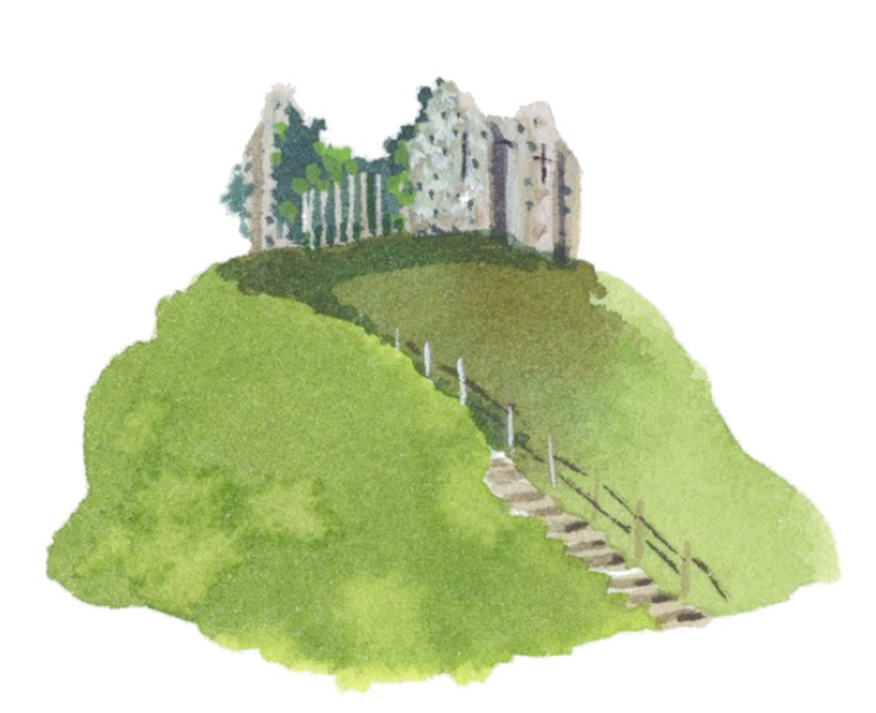
Eye began to lose its strategic importance after 1173 when the castle was attacked by Hugh Bigod, Earl of Norfolk, during the rebellion against Henry II, and later during the Barons’ War of 1265 after which it never regained its former status. Its prison continued in use up until the early C17th despite a gradual demolition of most of the castle buildings during the C14th. A windmill, built in 1561-2, stood on the motte until the circular mock keep was built in 1844. The ruins of the keep are still in place today, and Castle Street and Church Street trace the elliptical shape of the former outer bailey.
THE CHURCH
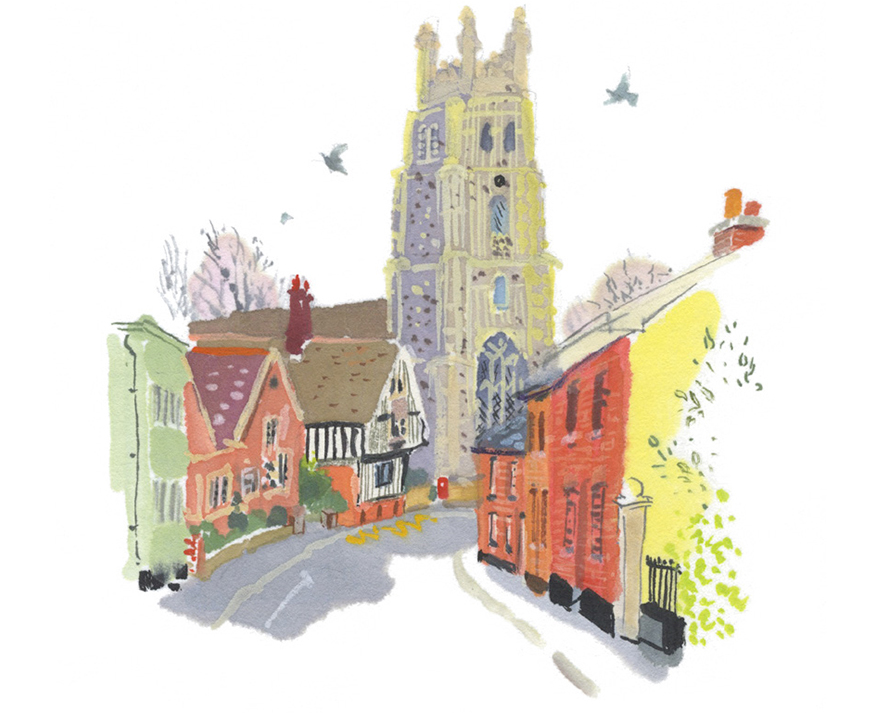
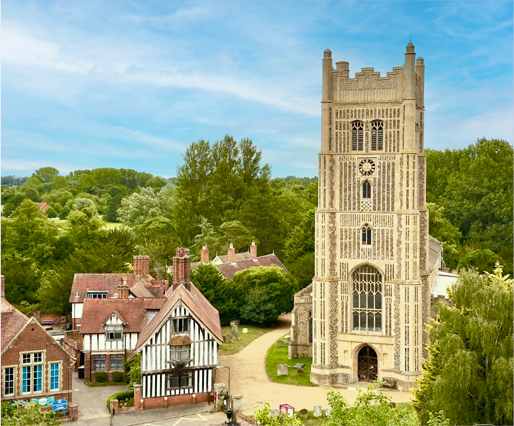
There has been a church in Eye at least since 1066 but the present building, the Church of St Peter and St Paul, dates from the C14th and is considered one of the finest churches in the county. A C13th Early English doorway, from a former building, was retained in the construction of the C14th church and in the C15th, and again the C16th, there were periods of further new work and renovation. A particular feature of the church is the magnificent late C15th rood screen which has a loft and rood designed by Ninian Comper in 1925. The screen is reputed to originate from the Great Massingham Priory of Norfolk.
COMMERCE
The earliest mention of industry in Eye records that in 1673 ‘the women’s employ in this town is making of bone lace’; the last lacemaker in the town died in 1914. Lace was not the only industry, however, and the County Directories, list the many trades and occupations of the people of Eye over the centuries. They included blacksmiths, wheelwrights, coopers, clockmakers, tailors, milliners and printers. There were several slaughterhouses, two breweries, and two retteries for the processing of flax. Iron and brass founders, agricultural implement makers, and church bell frame makers and hangers remained in operation into the C20th. Businesses recorded in Eye in 1937 included auctioneers, booksellers & printers, boot & shoe makers, corn chandlers, drapers, surgeons and watchmakers as well as banks, bakers, butchers and grocers.
THE BOROUGH
Eye was once the smallest borough in the country, its claim based on the 1205 Charter of King John. The Charter was renewed in 1408 then many more times by successive monarchs. However in 1885 the Town Clerk of Hythe proved that the original Charter belonged only to Hythe in Kent, the error having arisen from the similarity of the early English names and perpetuated by the Burgesses of Eye, conveniently overlooking mention of the ‘shippewaya’ and the privileges of shipwreck that could only be granted to a coastal town! The error was confirmed by archivists working in the Suffolk Record Office in Ipswich in the 1950s but borough status was not discontinued until 1974 after
government reorganization when Eye became a parish but retained a Town Council, a Mayor and the insignia.
THE RAILWAY
In 1846 Eye Borough Council failed in its attempt to route the new London-Norwich railway line through Eye. The line, completed in 1849, went instead through Diss ensuring its growth in prosperity and population while the importance of Eye waned. A branch line from Mellis finally closed in 1964. Today Eye, retains its character as a small market town, with a population of around 2,200.
OVER THE YEARS
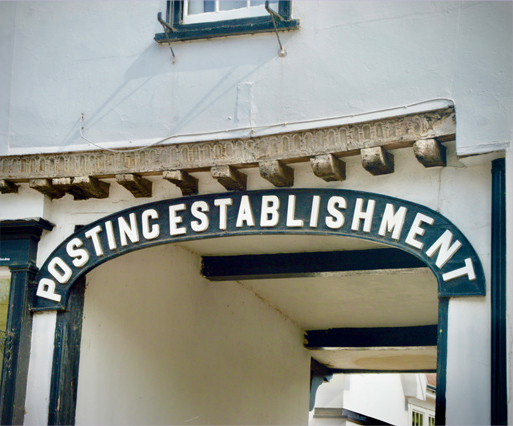
Through the years Eye has had a Deer Park, a Leper Hospital, a Jail, a Workhouse, a David Fisher Theatre, a Coaching Inn with Posting Establishment (now White Lion House), a Working Men’s Hall and Reading Room, a Guildhall (now a private house next to the Church), a Grammar School (now the primary school), twenty pubs (including beer houses) and an Airfield which was occupied by the 490th USAAF Bomb Group during World War II.
TODAY
Eye today has a hospital, a health centre, two schools, three churches, a library, a police station, a fire station, an industrial estate on the former airfield, a country market, and a picnic site (The Pennings) beside the River Dove. The Town Moors and the Community centre has play areas, football pitches and a large area of woodland walks.
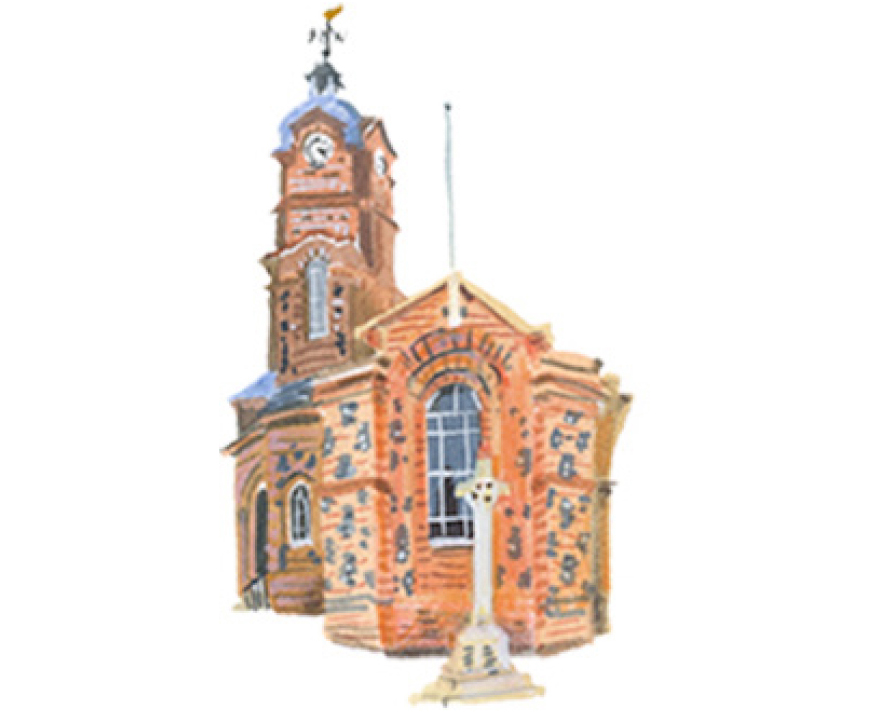
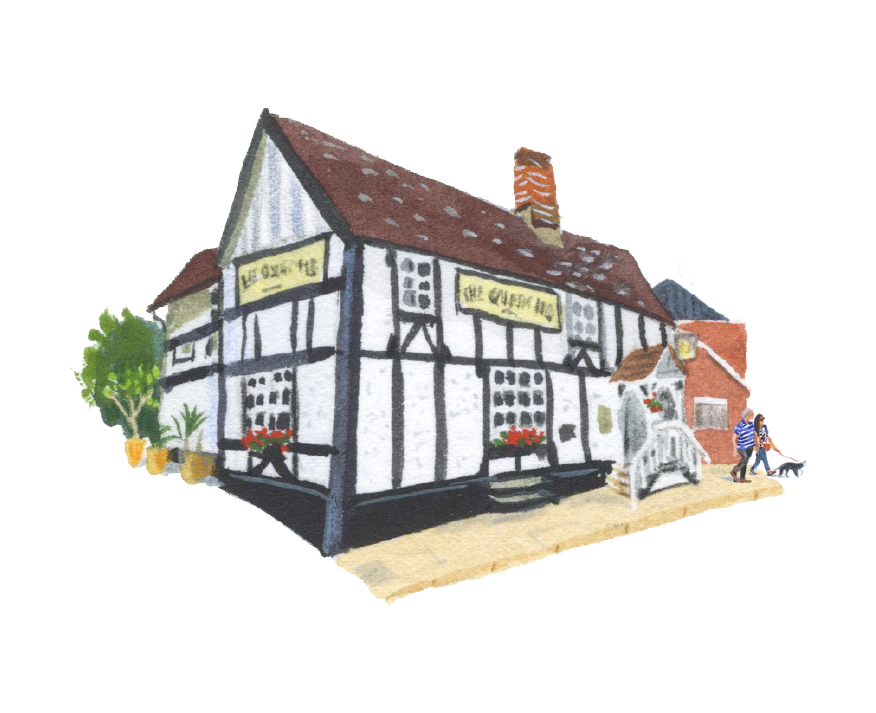
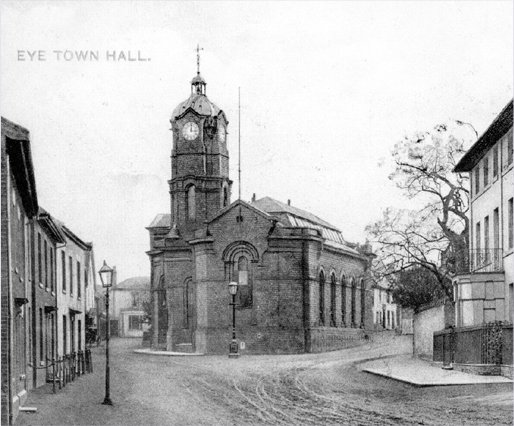
Eye has three Grade One listings: the Guildhall; the castle and the Church of St Peter and St Paul. There are seven Grade Two* and 152 Grade Two buildings in the town. Eye Town Hall, an imaginative and unorthodox building dating from 1856 and listed Grade Two*, was designed by Edward Buckton Lamb, one of the ‘Rogue Architects’ of the mid-Victorian period. Behind the Town Hall is The Queens Head, the sole surviving pub.
The Eye Archive and Heritage Group has saved and preserved a great many documents, photographs and historical memories about the people and organisations that have thrived in Eye and the surrounding area of Suffolk.
www.eyearchive.org.uk